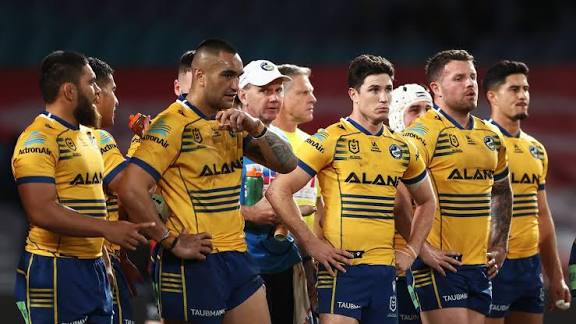
Parramatta’s first season under Jason Ryles was never going to be smooth. It was a reset, not a sugar hit. New systems, new standards, and a club that finally looked willing to wear short term pain if it meant building something that lasts.
The early part of 2025 was rough. Results weren’t there, combinations were unsettled, and the squad often looked caught between old habits and new expectations. Ryles made it clear he was looking forward, and he made tough calls on players who were not part of the long term picture, even if they could have helped win games in the short term.
The Dylan Brown situation became the lightning rod. Brown’s talent never disappeared. He later played outstanding football for New Zealand, and at times looked like one of the most dangerous five eighths in the world. But once he chose Newcastle on a 10 year deal, Parramatta moved on quickly. Ryles prioritised giving time to younger halves and depth options, and he started blooding players like Joash Papali and giving Dean Hawkins extended opportunities
There was also significant movement around the roster. Reagan Campbell Gillard departed, Bryce Cartwright moved on, and Sean Lane retired. Mid season, Parramatta added Dylan Walker from the Warriors, and he quickly became a useful bench option as a ball playing forward who could settle games. At dummy half, young hooker Ryley Smith became a week to week NRL player, and Talon De Silva arrived mid season to strengthen the depth and competition in that role.
The Jonah Pezet signing for 2026 drew debate. Some questioned how a one year deal for a player already committed elsewhere aligned with the youth first approach. Yet on pure football logic, it also made sense. Pezet gets a full season learning next to Mitchell Moses, and Parramatta add a high calibre organiser to stabilise their spine, especially considering Moses’ injury interruptions.
When Moses returned in 2025, Parramatta looked like a different side. Their best footy came with shape, kicking control, and confidence in the moments that matter. They finished 11th, winning 10 and losing 14, and for a first year under a new coach and new direction, it gave the club something to build on.
There was also significant movement around the roster. Reagan Campbell Gillard departed, Bryce Cartwright moved on, and Sean Lane retired. Mid season, Parramatta added Dylan Walker from the Warriors, and he quickly became a useful bench option as a ball playing forward who could settle games. At dummy half, young hooker Ryley Smith became a week to week NRL player, and Talon De Silva arrived mid season to strengthen the depth and competition in that role.
The Jonah Pezet signing for 2026 drew debate. Some questioned how a one year deal for a player already committed elsewhere aligned with the youth first approach. Yet on pure football logic, it also made sense. Pezet gets a full season learning next to Mitchell Moses, and Parramatta add a high calibre organiser to stabilise their spine, especially considering Moses’ injury interruptions.
When Moses returned in 2025, Parramatta looked like a different side. Their best footy came with shape, kicking control, and confidence in the moments that matter. They finished 11th, winning 10 and losing 14, and for a first year under a new coach and new direction, it gave the club something to build on.
Unmute
Advanced Settings
Fullscreen
Pause
Rewind 10 Seconds
Up Next
The early part of 2025 was rough. Results weren’t there, combinations were unsettled, and the squad often looked caught between old habits and new expectations. Ryles made it clear he was looking forward, and he made tough calls on players who were not part of the long term picture, even if they could have helped win games in the short term.
The Dylan Brown situation became the lightning rod. Brown’s talent never disappeared. He later played outstanding football for New Zealand, and at times looked like one of the most dangerous five eighths in the world. But once he chose Newcastle on a 10 year deal, Parramatta moved on quickly. Ryles prioritised giving time to younger halves and depth options, and he started blooding players like Joash Papali and giving Dean Hawkins extended opportunities.
There was also significant movement around the roster. Reagan Campbell Gillard departed, Bryce Cartwright moved on, and Sean Lane retired. Mid season, Parramatta added Dylan Walker from the Warriors, and he quickly became a useful bench option as a ball playing forward who could settle games. At dummy half, young hooker Ryley Smith became a week to week NRL player, and Talon De Silva arrived mid season to strengthen the depth and competition in that role.
The Jonah Pezet signing for 2026 drew debate. Some questioned how a one year deal for a player already committed elsewhere aligned with the youth first approach. Yet on pure football logic, it also made sense. Pezet gets a full season learning next to Mitchell Moses, and Parramatta add a high calibre organiser to stabilise their spine, especially considering Moses’ injury interruptions.
When Moses returned in 2025, Parramatta looked like a different side. Their best footy came with shape, kicking control, and confidence in the moments that matter. They finished 11th, winning 10 and losing 14, and for a first year under a new coach and new direction, it gave the club something to build on.
If Parramatta want the rebuild to turn into a finals push in 2026, these five players must take a clear step.
BackNext
2. J’maine Hopgood
Why his role is important
J’maine Hopgood is still one of the clearest examples of Parramatta identifying a player with tools and turning him into an Origin footballer. He came from Penrith as a fringe forward and quickly became a central piece of the Eels pack.
His defensive motor, his ability to ball play in the middle, and his offload game gave Parramatta something rare, a forward who could influence the rhythm of a match.
At his best, Hopgood is not simply a tackle bot. He is a tempo setter. He can absorb pressure, keep the ruck honest, and then spark momentum through late footwork, an offload, or a powerful carry that drags defenders in and creates time for the halves.
That is why his role is so important. Parramatta’s middle cannot just defend. It must help the spine play on the front foot.
What must improve
The Origin moment changed everything. The hit that broke him did not just injure his body; it interrupted his confidence with the ball. In 2025 he rebuilt his base through defence. His effort was undeniable, and he improved his tackle percentage to over 97 percent, a career high. That tells you the mindset is there.
Now he has to get the rest of his game back.
His offloads have dropped off. His punch with the ball has dropped off. His total running metres and average running metres have dropped off. Whether that is role based under a new system or confidence based coming off injury, the end result is the same. Parramatta need more attacking influence from him.
He needs to run with more authority again. He needs to be willing to engage defenders and force quick play the balls. He needs to bring back the part of his game that made him feel unpredictable to defend.
Why his improvement matters
If Parramatta want to compete for the eight, Hopgood’s improvement is non-negotiable. The Eels need him as a complete lock, not a defensive specialist. When he is confident with the ball, it improves everything around him. It gives Moses time. It gives Pezet cleaner sets. It helps the outside backs get early ball on the front foot.
If he returns to the player he was when he first arrived, Parramatta’s pack becomes far harder to handle and Ryles’ rebuild accelerates.
Leave a Reply